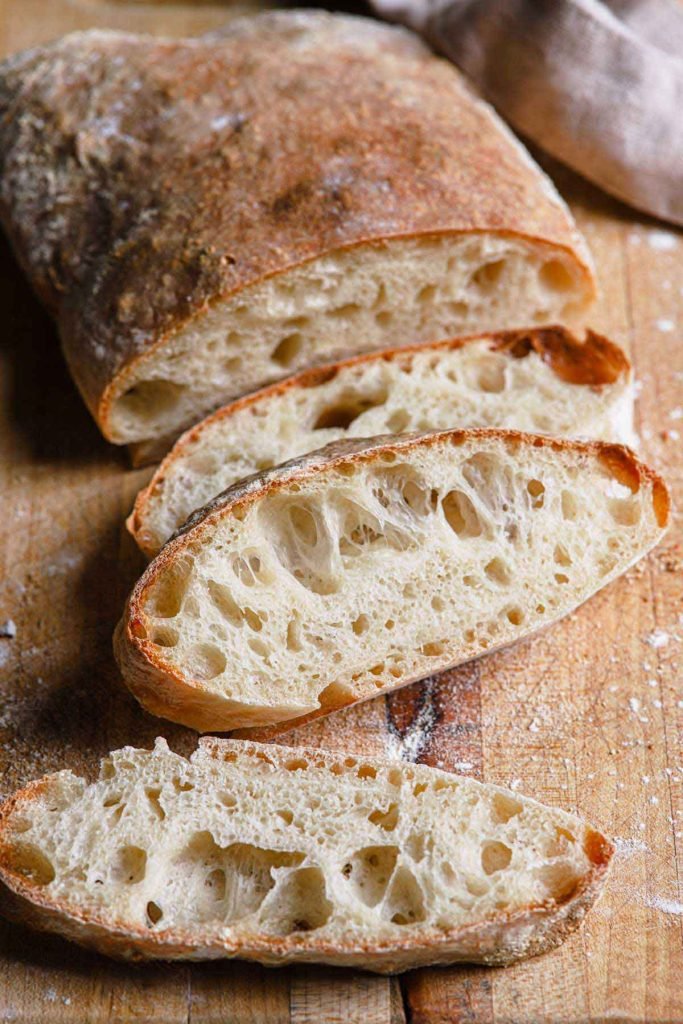
Ciabatta Bread: A Deliciously Rustic Italian Classic
Hey there, bread enthusiast! If you love the idea of biting into a crusty, golden loaf with a soft, airy interior, you’re in for a treat. I first encountered the magic of Ciabatta Bread during a trip to Tuscany, where I watched a local baker dust his hands with flour, shape the dough by hand, and slide it into a stone‐heated oven. The result was a loaf so perfect—crisp on the outside, pillowy on the inside—that I knew I had to recreate it at home. Since then, I’ve spent many kitchen sessions experimenting with hydration levels, fermentation times, and flour blends, and I’m thrilled to share everything I’ve learned with you. Whether you’re a seasoned baker or just dipping your toes into artisan breads, this recipe will guide you step by step to a loaf that tastes like sunshine and tradition.
Nutritional Benefits of Ciabatta Bread
While bread is often thought of as simple carbs, when made with quality ingredients and enjoyed in moderation, ciabatta can be part of a balanced diet. Here’s why I feel good serving it alongside salads, soups, or as the base for my favorite panini:
- Complex Carbohydrates: Ciabatta provides a steady release of energy, helping you power through your day without the sugar crash of refined treats.
- Fiber Content: Using part‐whole wheat or adding a small percentage of whole‐grain flour boosts fiber, aiding healthy digestion and helping maintain steady blood sugar levels.
- Protein Boost: The combination of flour and a longer fermentation time can slightly increase the protein bioavailability, helping support muscle repair and immune function.
- Natural Fermentation: A slow, cold rise allows for partial breakdown of gluten and phytic acid, making nutrients more accessible and the bread easier to digest for many people.
- Low Fat & No Added Sugar: Traditional ciabatta uses just flour, water, yeast, and salt—no added oils or sweeteners—making it a clean, simple choice for everyday meals.
Adaptable Variations & Flavor Twists
I love that ciabatta’s simple dough acts as a blank canvas for all kinds of flavors. Here are a few of my favorite riffs to suit any meal or mood:
- Herb & Garlic Ciabatta: After the first rise, gently fold in 1–2 tablespoons chopped fresh rosemary, thyme, or basil, and 2 minced garlic cloves for an aromatic twist perfect for bruschetta.
- Whole-Wheat Blend: Replace up to 25% of the bread flour with whole‐wheat flour to add nutty depth and extra fiber—just be sure to maintain high hydration to keep the crumb light.
- Olive & Sundried Tomato: Fold in ½ cup chopped, pitted olives and ¼ cup chopped sundried tomatoes during the stretch-and-fold stage for a Mediterranean‐inspired loaf.
- Cheese‐Stuffed Ciabatta: Roll out the dough gently, sprinkle shredded Parmesan or fontina in the center, then fold the dough over to seal for cheesy pockets that ooze with every bite.
- Seeded Top: Brush the shaped loaves with water, then sprinkle with sesame, poppy, or flax seeds before baking for extra crunch and visual appeal.
- Olive Oil & Balsamic Dip: Drizzle freshly baked slices with good‐quality olive oil and a splash of balsamic vinegar for dipping—a classic Italian aperitivo treat.
Recipe: Classic Ciabatta Bread
Ingredients (Makes 2 Medium Loaves)
- 500 g (about 4 cups) bread flour
- 380 ml (about 1⅔ cups) lukewarm water
- 1 teaspoon active dry yeast
- 2 teaspoons fine sea salt
- 2 tablespoons extra-virgin olive oil (optional, for handling)
Instructions
- Activate the yeast: In a small bowl, combine 50 ml of the water with the yeast and a pinch of sugar. Let stand 5–7 minutes until foamy on top, indicating active yeast.
- Mix the dough: In a large mixing bowl or the bowl of a stand mixer, combine the flour and salt. Add the activated yeast mixture and the remaining water. Stir with a wooden spoon or low-speed paddle just until all the flour is hydrated and a shaggy, sticky dough forms.
- Bulk fermentation: Cover the bowl with plastic wrap or a damp towel. Let the dough rise at room temperature for 1 hour, then perform a series of four stretch-and-folds (every 20 minutes): reach under the dough, gently pull one side up, and fold it over itself. This builds strength in the gluten network.
- Long, cold rise: After the final fold, cover the bowl tightly and refrigerate for 12–18 hours. The slow fermentation develops flavor and improves digestibility.
- Shape the loaves: Generously flour your work surface and hands. Pour the dough out gently—don’t deflate it. Divide into two pieces. With floured hands, shape each piece into a loose rectangle: fold the sides in, then the top down and bottom up to form a rough loaf. Place each on a well-floured, linen-lined baking sheet or a couche, seam side down.
- Final proof: Cover the shaped loaves lightly and let rise at room temperature for 1–1½ hours, until noticeably puffy but not doubled.
- Preheat the oven: Place a baking stone or heavy sheet pan on the middle rack. Preheat to 475 °F (245 °C) at least 30 minutes before baking. Place a shallow pan on the bottom rack for steam.
- Bake with steam: When ready, slide the loaves onto the hot stone/pan. Quickly pour 1 cup of hot water into the bottom steam pan and close the door. Bake 20–25 minutes until crust is deep golden and the loaves sound hollow when tapped on the bottom.
- Cool completely: Transfer the loaves to a wire rack. Let them cool at least 1 hour before slicing to allow the crumb to set and flavors to develop fully.
Practical & Valuable Tips
- Hydration is key: Ciabatta dough is wetter than many breads. Resist the urge to add extra flour—wet dough yields the open, airy crumb that defines ciabatta.
- Use a bench scraper: To handle the sticky dough, keep a bench scraper handy and floured so you can lift and fold without tearing.
- Cold fermentation: The long, slow rise in the fridge deepens the flavor. Plan ahead, but don’t skip this step—it’s what gives ciabatta its signature taste.
- Steam matters: Steam in the oven keeps the crust from setting too quickly, allowing the bread to rise fully before the crust hardens. A hot pan of water does the trick.
- Don’t rush cooling: Slicing too soon results in gummy crumb. Allow full cooling so the interior finishes cooking with residual heat.
- Flour alternatives: For a nutty twist, use up to 20% whole-wheat or spelt flour, but maintain high hydration to preserve texture.
- Storage: Store ciabatta in a paper bag at room temperature for up to 2 days. For longer storage, freeze slices and reheat in the oven or toaster.
- Reheating: Refresh day‐old ciabatta by sprinkling with water and heating at 350 °F (175 °C) for 5–8 minutes to restore crispness.
Frequently Asked Questions
- Why is my ciabatta so dense?
It’s likely under-hydrated or over-handled. Make sure you measure flour correctly, maintain high hydration, and perform gentle folds to build strength without deflating the dough. - Can I bake without steam?
You can, but the crust may form too quickly and limit oven spring. If you lack a steam pan, spritz the oven walls with water using a spray bottle right before loading the dough. - Is a stand mixer required?
No—ciabatta can be mixed entirely by hand. Use a sturdy spoon or dough whisk to combine ingredients, then stretch-and-fold by hand. - Can I make smaller ciabatta rolls?
Absolutely! Divide the dough into 6–8 pieces and shape into short batards or balls. Reduce baking time to 15–18 minutes and watch for a golden crust. - Why do I need to cool the bread fully?
Cooling allows the interior crumb to finish setting. Cutting too early releases steam and results in a gummy texture inside.
Call to Action
I hope this guide inspires you to create your own rustic Ciabatta Bread at home—golden crust, airy crumb, and all the soul of an Italian bakery. When you bake your first loaf, snap a photo of that beautiful crumb and crust, and tag me on Pinterest so I can re-pin your creations! And if you try any of the variations—herb-infused, cheesy-stuffed, whole-grain—drop a comment below to share your baking triumphs and tips. Here’s to flour on your fingers, the scent of fresh bread in your kitchen, and the joy of homemade ciabatta. Buon appetito!